
Rocket family A–G
Design v19 · not printed yet · 2027 season
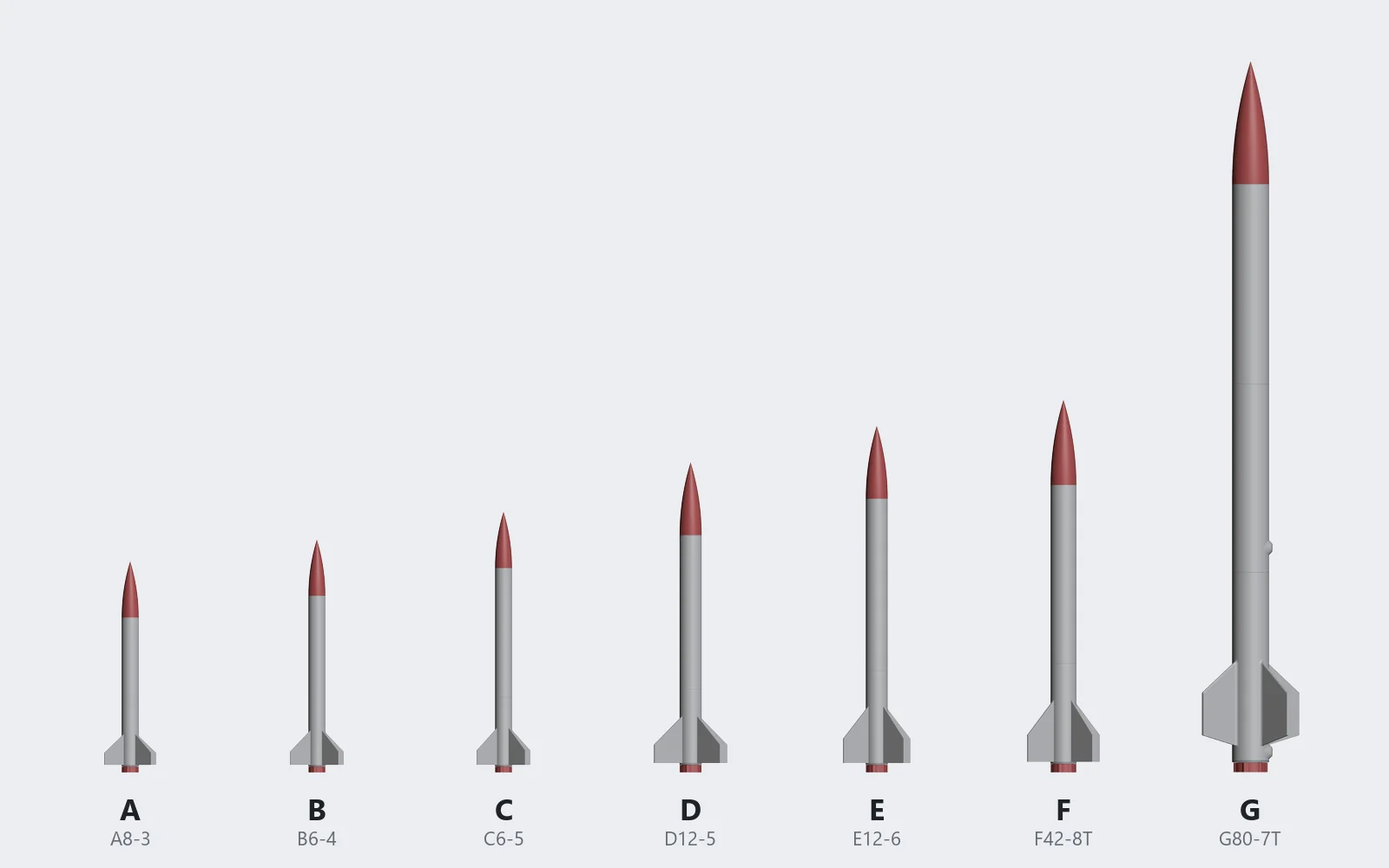
Seven 3D-printed model rockets, one per motor class from A to G, generated from one parametric script — plus a launch stand, a launch controller and a motor box. Being prepared for the 2027 season, with the goal of test-flying and certifying every level.
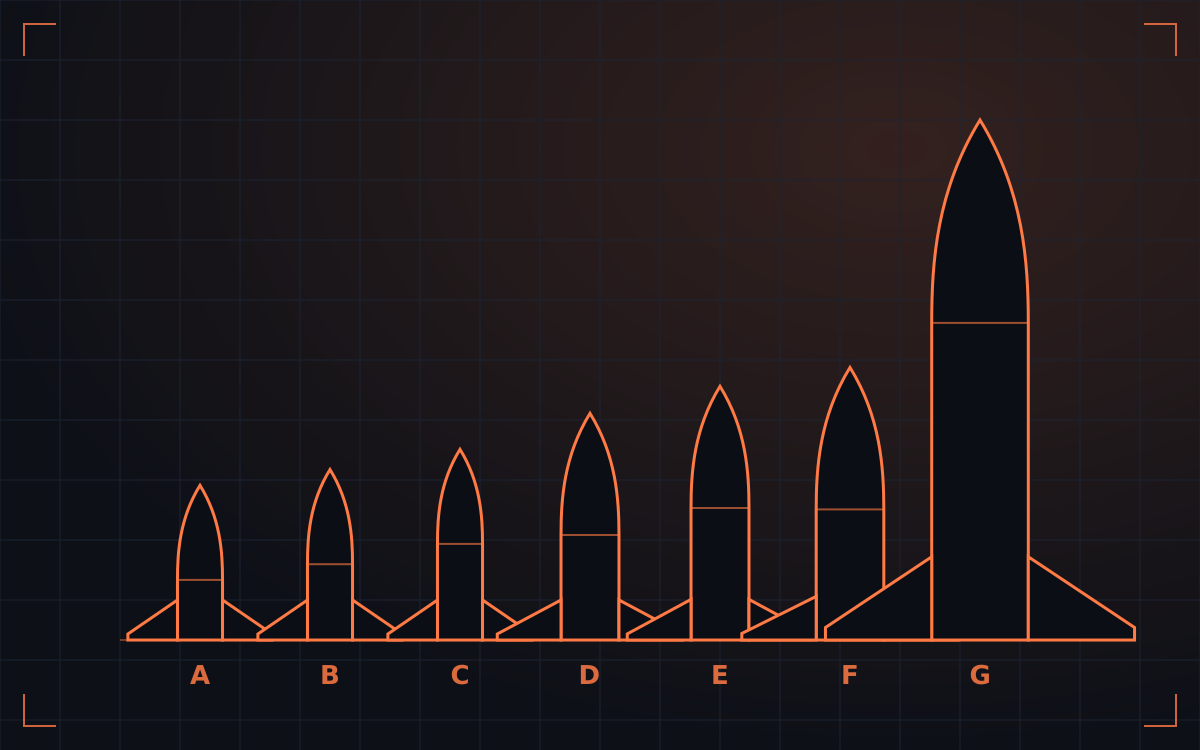
- rockets
- 7classes A to G
- mm
- Ø21–60body diameter
- m
- ≈50–545estimated apogee
- prints so far
- 0designs only
Rocket family A–G in short
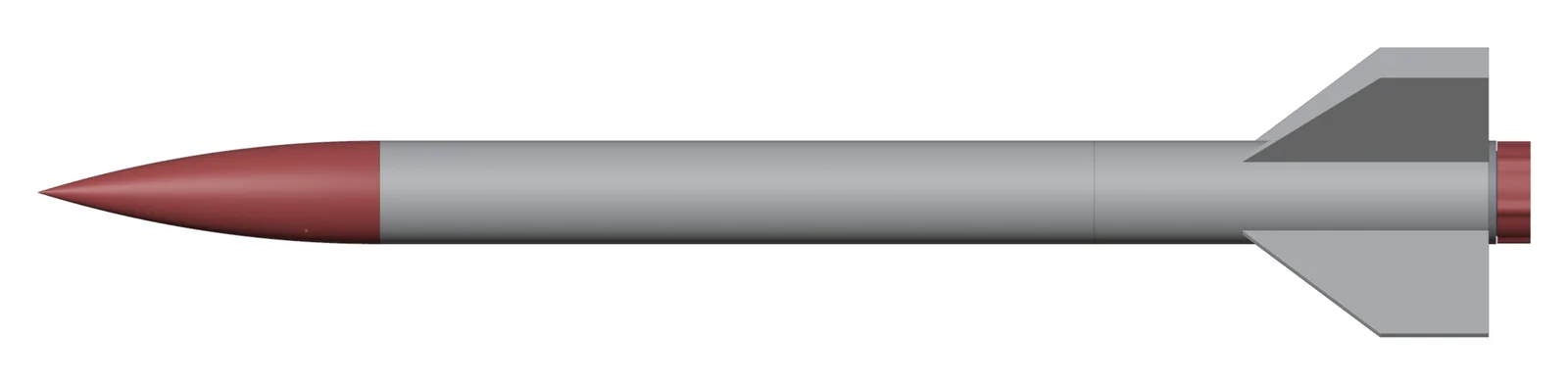
After the failed first flight I redesigned the large rocket (now class G, Ø60 × 1156 mm) and turned its construction into a parametric generator that builds smaller rockets for A to F motors. Every rocket shares the same ideas: a screw-on motor retainer with no glue, keyed section joints, a nose cone with a shoulder and a proper recovery attachment. Mass, stability and altitude are estimated for each class.
What works, and what does not
- Classes A–C share one light Ø21 airframe, D–E one Ø36 airframe, F is Ø42, G is the original R02 (Ø60)
- Screw-on motor retainer: a sleeve with a left-hand thread into the airframe and a right-hand thread for the nut
- Harmonica walls from R02 (1.0 mm skin, ribs to 2.0 mm, 3 ring frames); fins printed with the body, R4 fillets and rounded leading edges
- Stability margins of about 1.6 to 2.1 calibres across the family; two launch guides on every rocket
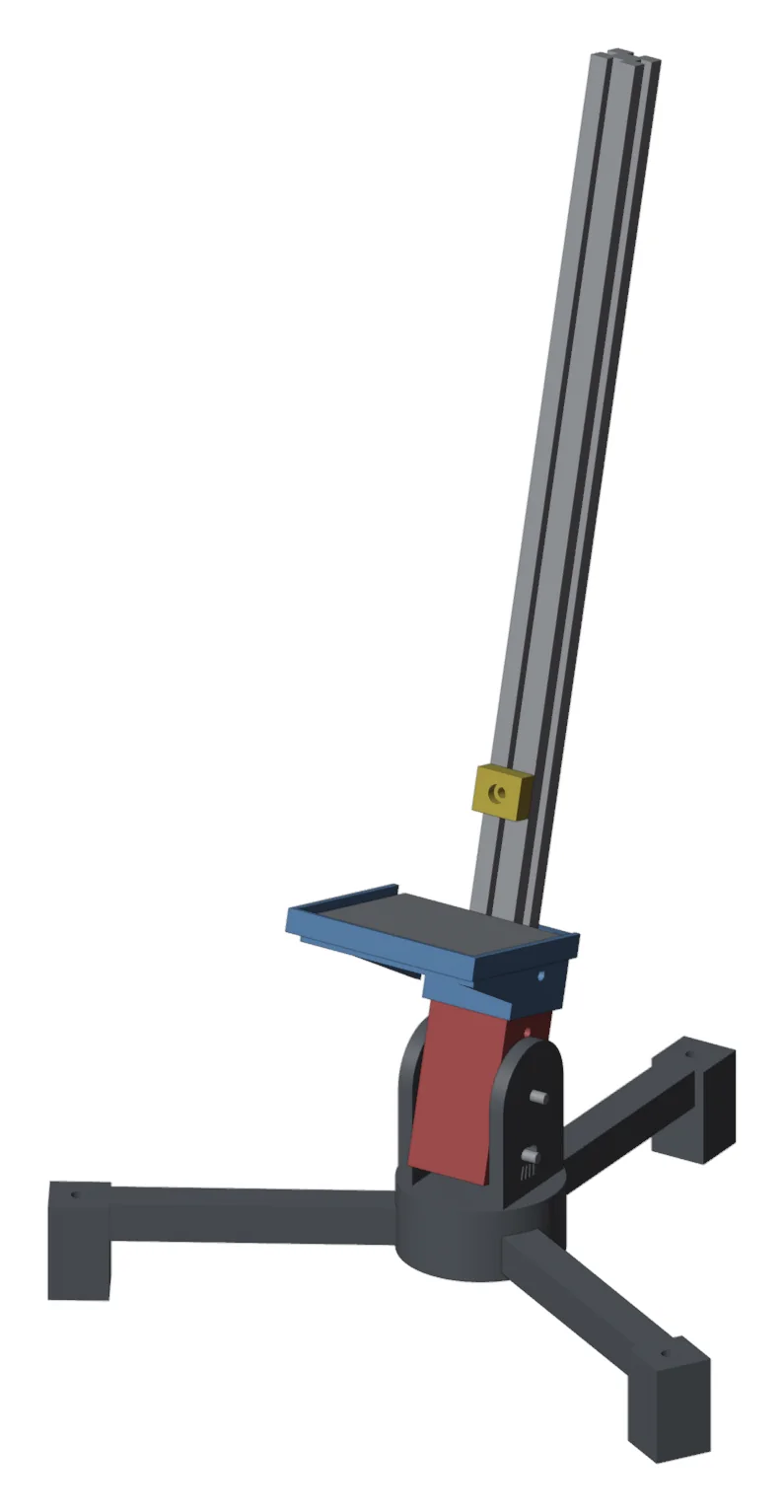
- Launch stand for a rod or a 2 m 1010 rail, tilting 0/10/20°; every rocket has its own QR code linking to its data page
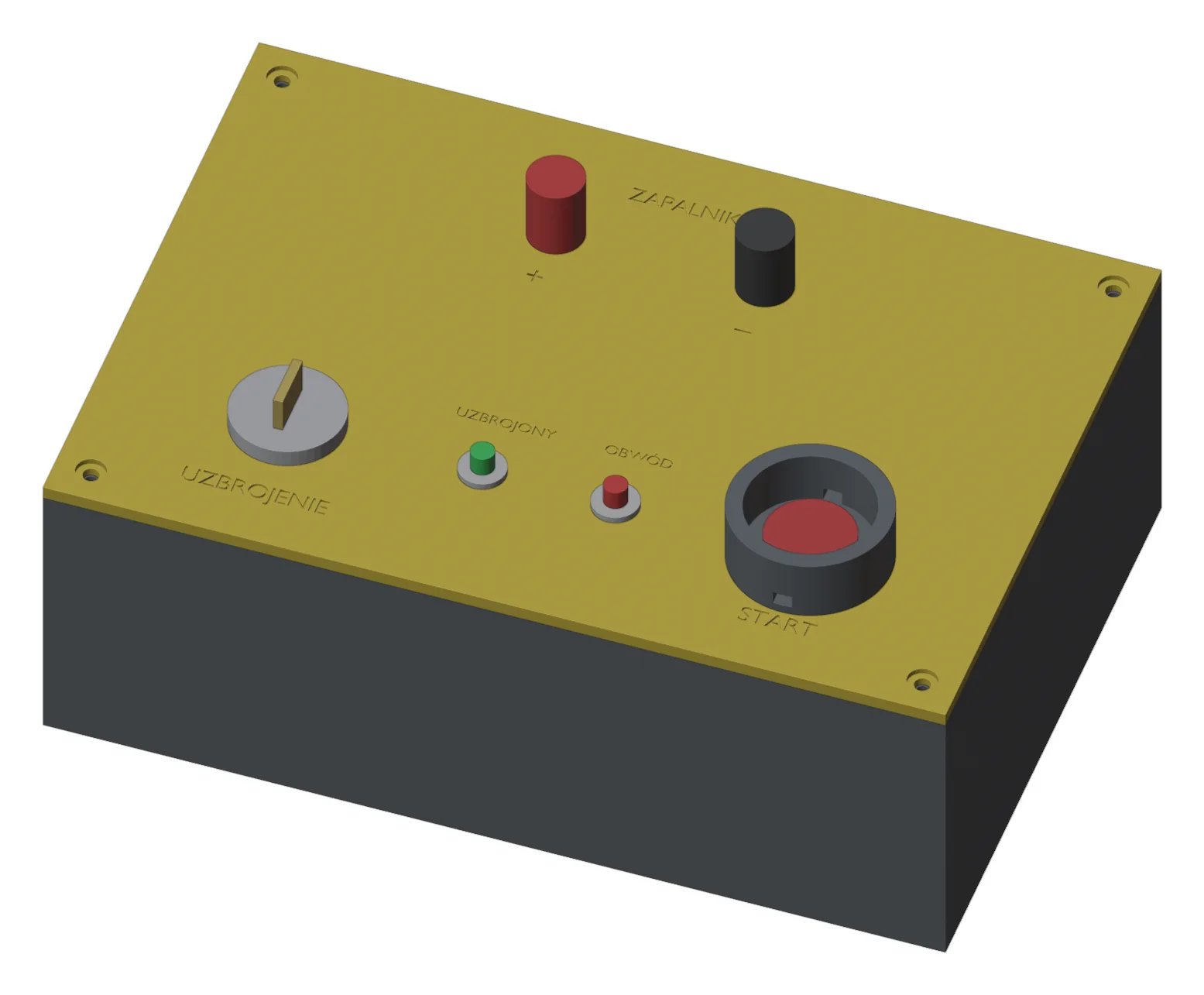
- Launch controller with a key, a covered START button and a circuit-test LED
- Nothing has been printed or flown yet.
- Mass, stability and altitude are estimates from the models (Barrowman method, constant average thrust); each rocket has to be weighed and balanced before its first flight.
What had to be got right
Fix the failure first
The first rocket failed on recovery. The redesign adds a nose-cone shoulder, a parachute ring with a U-bolt and an electronics bay — before anything else.
One script, seven rockets
Diameters, fins, joints and threads come from parameters, so a change made once reaches every class.
Ground kit included
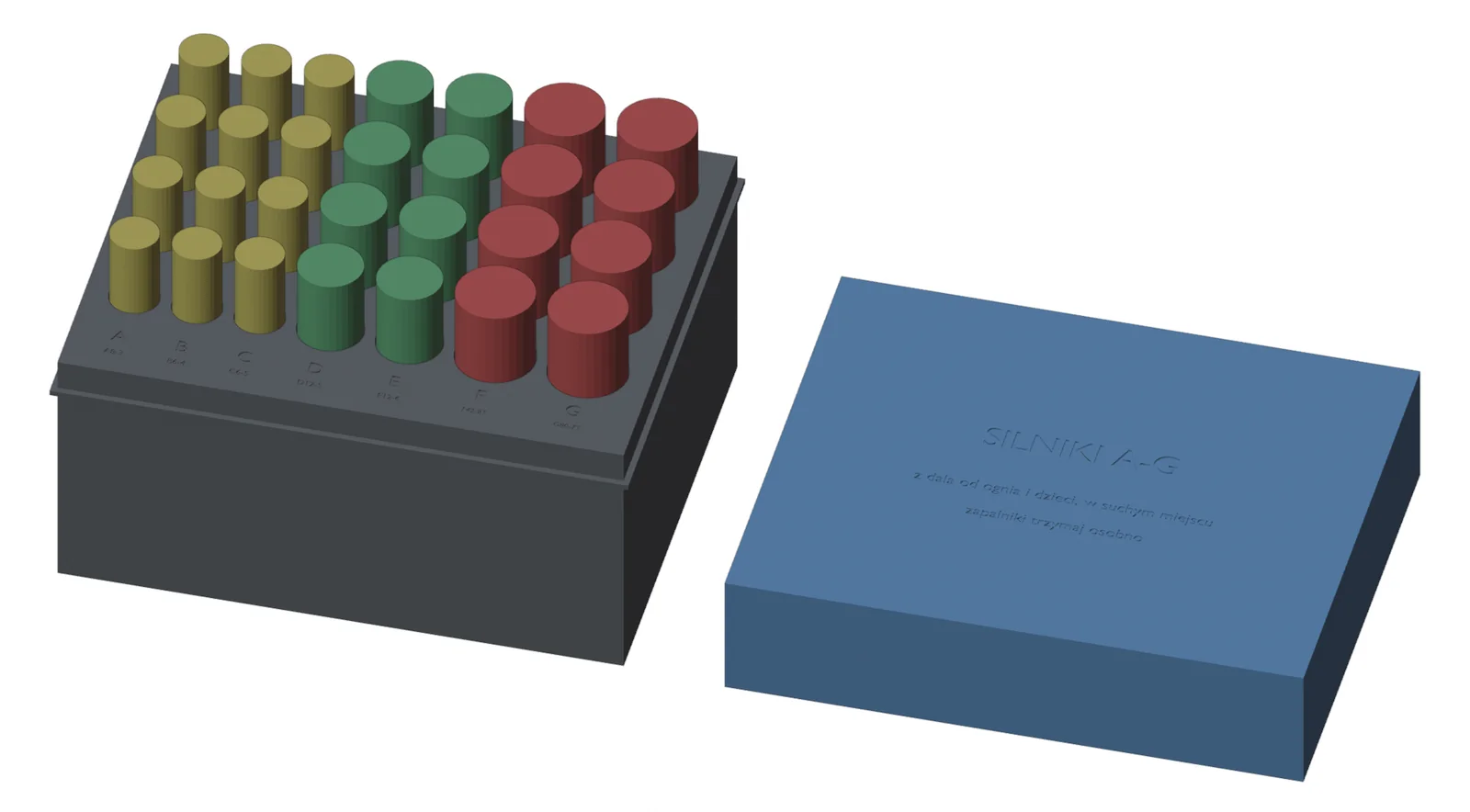
A rocket is not much use without somewhere to launch it from, so the stand, the controller and the motor box are part of the project.
See it


Related projects
Model rocket
A rocket designed from scratch and printed in sections. The first flight failed — and taught more than a success would have.
Open →3D printing
FDM printing in engineering materials and carbon-filled composites: the machine behind the parts in the other projects.
Open →Portable AI Workstation
A carry-anywhere enclosure around an NVIDIA Jetson module, with a touchscreen and the full Ubuntu desktop.
Open →Figures describe this project's own build at the time of writing, not a promise of anything else. All projects and statuses.