Rocket family A–G · class G
Class G – AeroTech G80-7T
Design v19 · not printed or flown yet · 2027 season
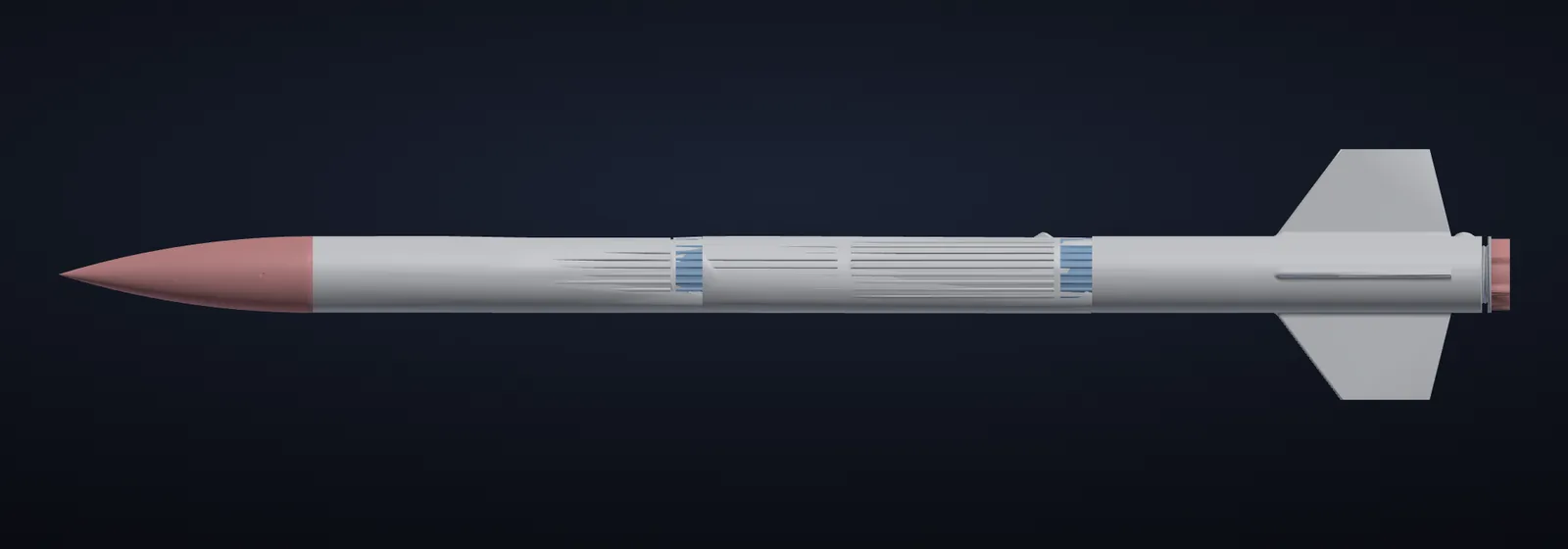
3D-printed model rocket from the QuasiPI rocket family, airframe G (R02). The original R02 design – the reference for the whole family. Electronics bay for an altimeter/IMU in the nose shoulder.
ABS / ASAFDMBarrowmanclass G
- length
- 1137 mmbody Ø60, fin span 197 mm
- mass
- ≈1.1–1.3 kgwith motor (ABS/ASA)
- apogee
- ≈385–480 mestimate
- stability
- ≈1.8–2.2 (earlier estimate)calibres (estimate)
Data
Specification
| Motor class | G |
|---|---|
| Motors |
|
| Dimensions | 1137 mm × Ø60, fin span 197 mm |
| Lift-off mass | ≈1.1–1.3 kg (motor limit –) |
| Stability margin | ≈1.8–2.2 (earlier estimate) calibres |
| Estimated apogee | ≈385–480 m |
| Speed leaving the guide | ≈14–15 m/s |
| Launcher | 1010 rail, 1.8–2.0 m – two M4 rail buttons |
| Recovery | 80 cm parachute, Kevlar 3–4 m, U-bolt anchor, Nomex blanket |
| Material | ABS or ASA (ASA-CF possible for the motor section). Never PLA next to the motor – it softens at ≈60 °C. Printed in an enclosed chamber (60 °C). |
| Heat protection | Motor wrapped in aluminium or Kapton tape, fire-proof wadding above the motor. |
Construction
How it is built
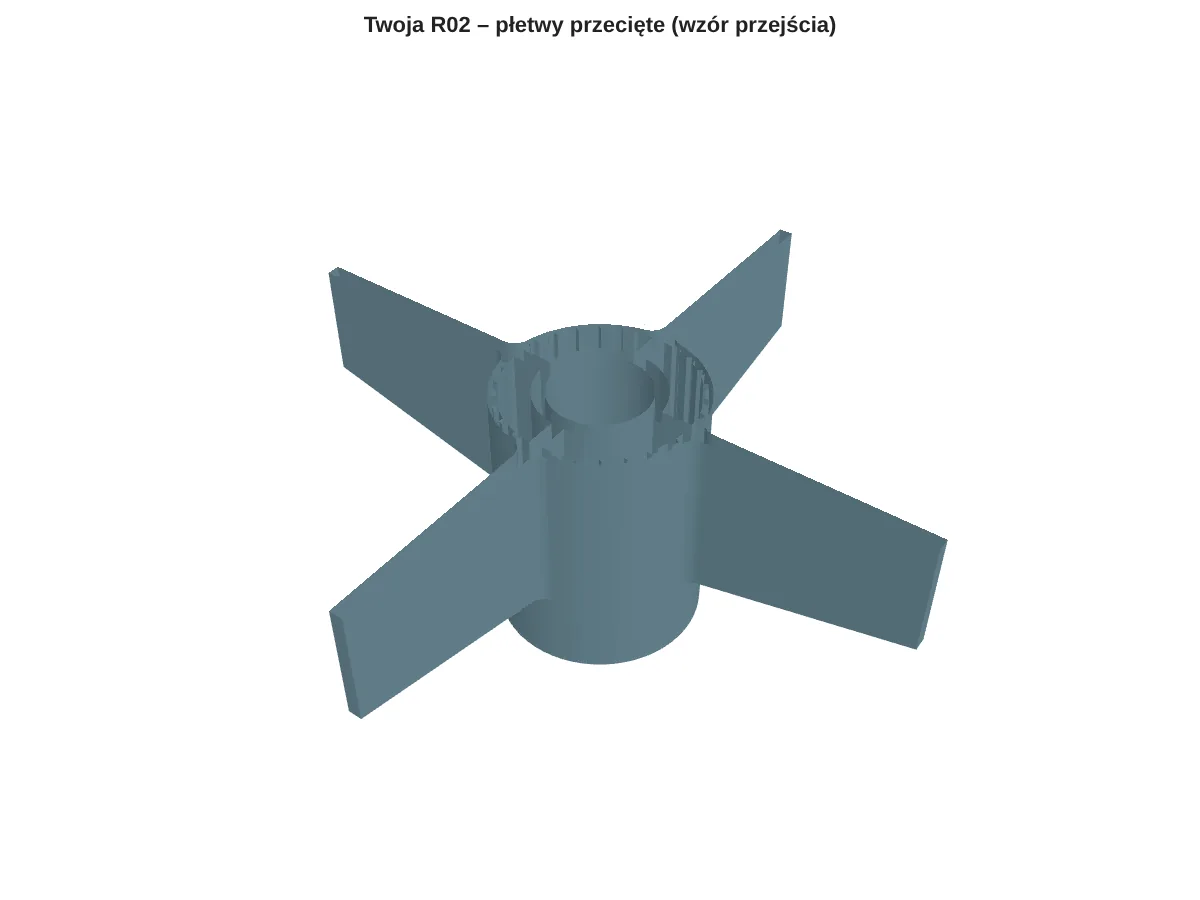
- Harmonica wall (from the original R02): 1.0 mm skin with internal longitudinal ribs to 2.0 mm, plus 3 internal ring frames per tube. ≈18 % lighter than a plain 2 mm wall, protects the thin skin against dents and cracking layers. Outer diameter unchanged.
- Fins printed with the body (no glue, cannot fall off), 2.4–2.8 mm thick, with R4 concave fillets that fade smoothly into a fully rounded leading edge.
- Motor locked both ways: forward stop ring + screw-in retainer / threaded sleeve and nut – never just a friction fit.
- Two guide points on the launcher (two lugs or two rail buttons) so the rocket cannot rock on the rod.
- Estimated drag reduction from the rounded leading edges: ≈20–35 % of total Cd (semi-empirical estimate).
Interactive 3D
The 3D model: assembled, exploded, cut away
drag to rotate · scroll or pinch to zoom · built from the print files (simplified mesh)
Flight simulator
How high will it fly? Pick a motor
1-D simulation: average catalogue thrust (approximate), Cd from a Barrowman estimate, mass from the 3D models. An estimate, not a measurement: the rocket has not flown yet.
Renders
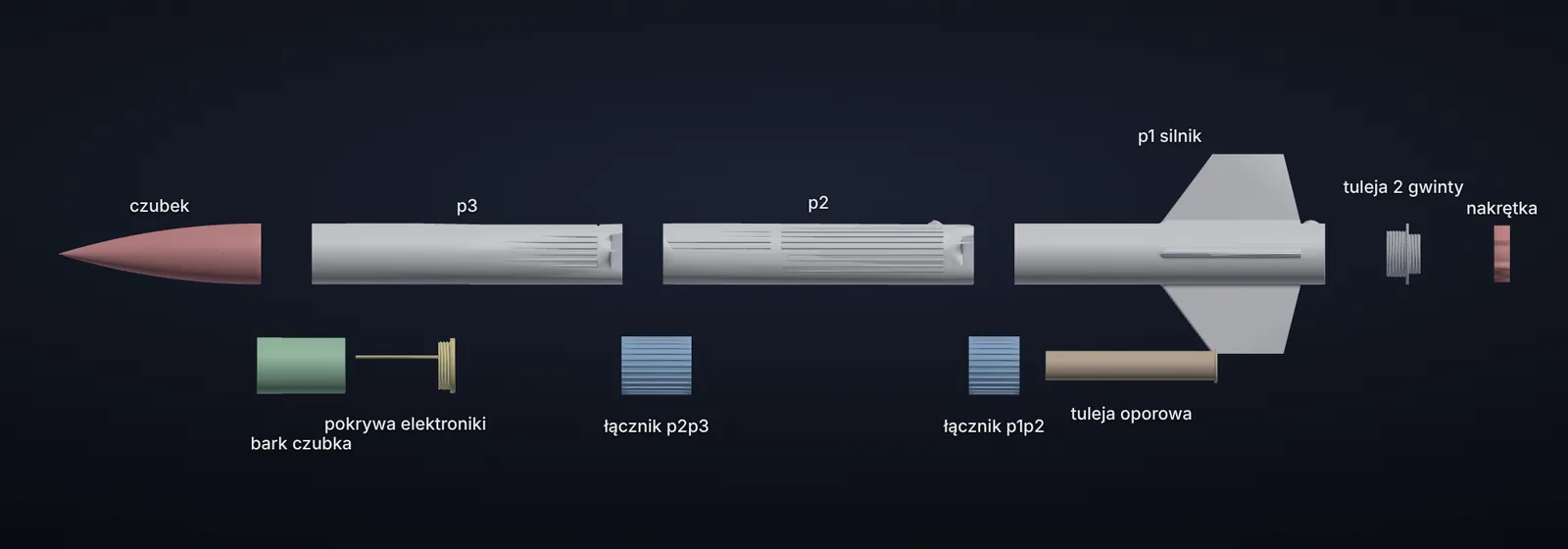
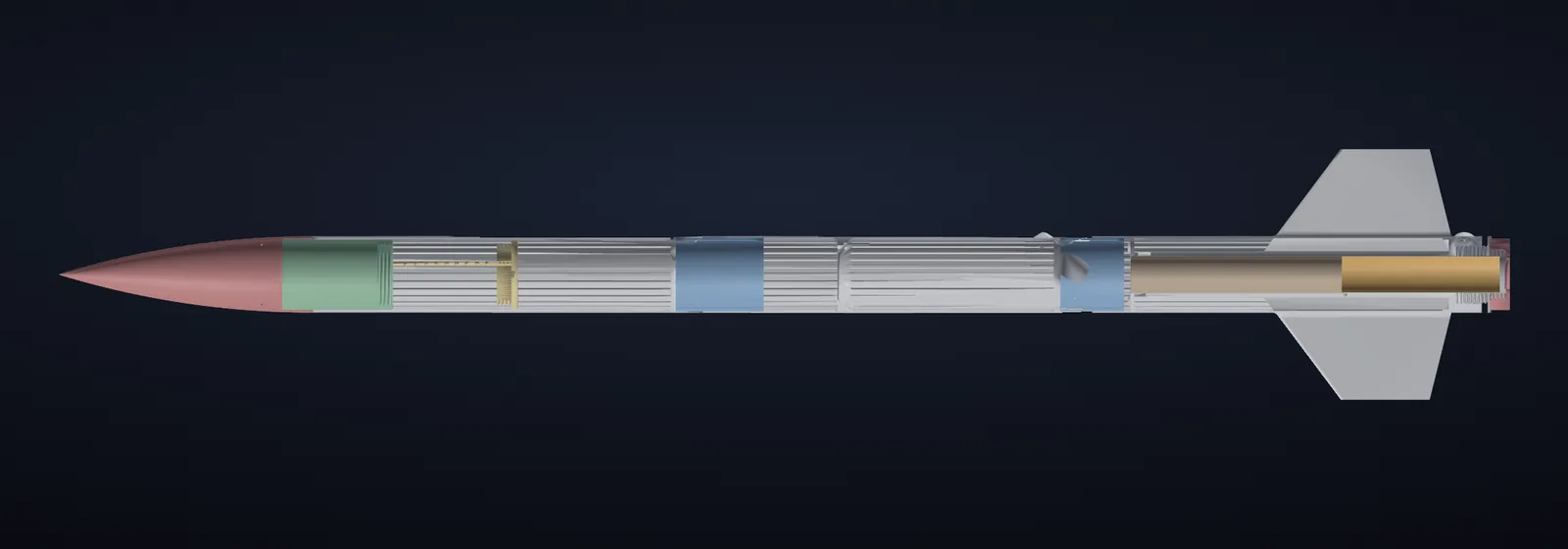
Rendered from the actual print files
Plan – 2027 season
- The family is being prepared for the next season (2027).
- Every class will be printed, weighed, balanced and test-flown.
- The goal is to work towards certification for each level of the family.
Honest status
- Not printed or flown yet – all figures are estimates from the 3D models (Barrowman method, 1-D flight model, approximate catalogue motor data).
- Before the first flight the rocket must be weighed and its centre of gravity checked: margin = (CP − CG) / diameter ≥ 1.5.
- Fly only under local rules and with the required permissions.
Label
QR code on the rocket
Every rocket carries a QR code that opens this page.